How to Roll Sprouted Grains at Home for Maximum Nutrition (UK Guide)
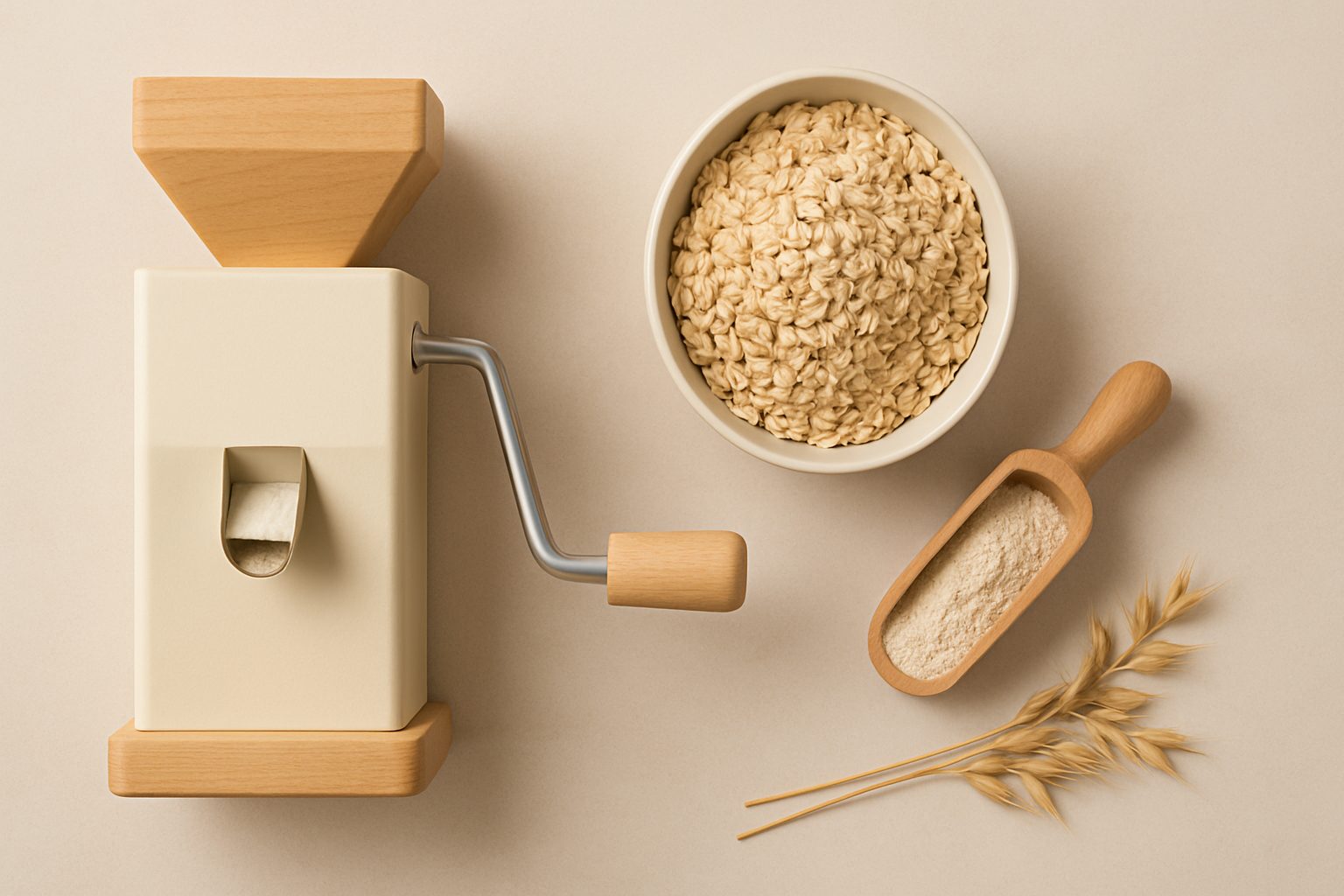
Sprouting grains transforms their nutritional profile—increasing bioavailability of minerals, boosting vitamin content, and reducing anti-nutrients that inhibit absorption. Rolling freshly sprouted grains locks in those gains by cracking the hull and flattening the grain, making nutrients more accessible during digestion. But sprouted grains are trickier to roll than dry grain: they're moist, prone to sticking, and demand equipment with wider roller gaps and better feed control. This guide walks you through the entire process, from sprouting to rolling, and explains why your grain roller choice matters far more for sprouted work than standard milling.
Why Roll Sprouted Grains?
When you sprout a grain, you're activating enzymes and breaking down phytic acid—a compound that locks up magnesium, zinc, and iron. A single day of sprouting can increase folate content by up to 400% in some grains. Rolling (rather than milling to flour) preserves the fibre structure whilst cracking the seed coat, so your digestion gets the nutritional benefit without the fine particle size that causes blood sugar spikes.
Rolled sprouted grains are brilliant for overnight oats, porridges, and baking—they cook faster than whole grains, taste fresher than store-bought flakes, and you know exactly what's happened to them. Most commercial rolled oats are heat-treated, flattening both the grain and some of the enzyme activity. Yours won't be.
Sprouting: Getting the Foundation Right
Start with a clean grain—wheat berries, rye, spelt, barley, or oats all work. Rinse them thoroughly under running water. Place in a large jar (about 2 cm of grain at the bottom) and cover with twice their volume of cold water. Leave overnight.
The next morning, drain completely. Rinse again. Repeat rinsing twice daily—morning and evening—for 3–5 days, depending on temperature. In warm weather (above 18°C), you'll see tiny white root shoots (radicles) after 2–3 days. In a cool UK kitchen, it might take 5 days. Stop when the radicles are about 2 mm long; longer sprouts waste energy and can spoil quickly.
Keep the jar in a tilted position (leaning against a bowl) to allow air circulation. Mould is the main enemy—stagnant moisture kills sprouting. If anything smells off, discard it.
Drying: The Critical Step
This is where most home sprouters stumble. Wet grains won't roll; they'll gum up the rollers, stick to each other, and create a paste instead of a flake.
Spread your sprouted grains on clean muslin or a colander lined with baking paper. Pat gently with a dry cloth to remove surface moisture. Then dry them. You have three options:
Air drying takes 2–3 days at room temperature (20°C) with good air movement. Spread grains about 1 cm deep and turn them hourly. It's the gentlest option—no heat, no enzyme loss—but slow and weather-dependent in the UK.
Oven drying at low temperature (40–50°C for 4–6 hours, door cracked open) is faster. Check frequently and stir every 30 minutes. Anything above 50°C risks damaging enzymes, so accuracy matters.
A food dehydrator set to 40–45°C is ideal. Spread grains on trays and dehydrate for 6–8 hours, stirring halfway. This is the most reliable method for consistent results.
The grains are ready when they snap cleanly (not bend) between your fingers and have lost all visible moisture. They should feel crisp, not dry and hard—you're not making porridge oats that require cooking for 45 minutes.
Rolling Sprouted Grains: Equipment Matters
Here's the essential truth: a standard grain roller designed for dry whole grains will struggle or fail with sprouted grains. Even slightly damp sprouts gum up narrow roller gaps and cause bridging (grains piling up without feeding through).
Roller gap width is crucial. Most quality domestic rollers offer adjustable gaps from 0.5 mm to 3 mm. For sprouted grains, you want a minimum gap of 1.5 mm—wider than you'd use for dry grain. This prevents compression and stalling. Some specialist sprouting models go up to 4 mm.
Feed mechanism matters too. A vibrating hopper or auger feed is worth the extra cost when dealing with sprouted grain. Manual feed (where you push grains in) gives better control but is tedious for large batches.
Build quality should include stainless steel rollers or hardened ceramic—softer steel dents and grooves under the uneven pressure from moist grain.
Electric models rated for continuous duty are preferable to single-use hand-crank versions; they handle the stop-start rhythm of fed sprouted batches without strain.
Rolling: The Process
Check dryness again. Grains should be at about 8–10% moisture—noticeably dry but not brittle. If they feel tacky, give them another hour of drying.
Set your roller gap to 1.5–2 mm for a light flake. Feed slowly, in small batches. Watch for bridging (grains jamming in the hopper). If it happens, stop, clear the jam, and feed more slowly. Sprouted grains are more delicate than dry ones—overfeeding causes them to compress rather than crack.
Catch the output in a clean bowl. The flakes should look slightly textured, with the hull cracked open and endosperm just compressed enough to create a flat, pea-like shape. If they're coming out powdery, your gap is too narrow or your grains are still too moist.
Storage and Shelf Life
Rolled sprouted grains oxidise faster than dry grains because you've cracked the hull and exposed the interior. Use within 2–3 weeks, or freeze in airtight containers for up to 3 months. Store in a cool, dry place away from direct light.
The fresher you use them, the better the flavour and nutrient retention.
Common Challenges
Grains sticking together: They're still too moist. Dry longer.
Roller jamming: Either the gap is too narrow for your grain size, or the feed rate is too fast. Widen slightly and slow down.
Flat, compressed pucks instead of flakes: Grain is too dry and brittle, or the gap is too wide. Increase gap slightly, or dampen grains imperceptibly with a mist bottle and re-dry for an hour.
Rolling sprouted grains at home rewards patience and precision. The result—fresh, living flakes packed with activated nutrition—is worth the effort, and dramatically better than dried out commercial alternatives.
More options
- Electric Home Grain Flaker / Roller (Amazon UK)
- Manual Grain Roller for Home Use (Amazon UK)
- KitchenAid / Stand Mixer Grain Roller Attachment (Amazon UK)
- Eschenfelder Grain Flaker (Amazon UK)
- Whole Grain Oats & Wheat Berries (consumable upsell) (Amazon UK)