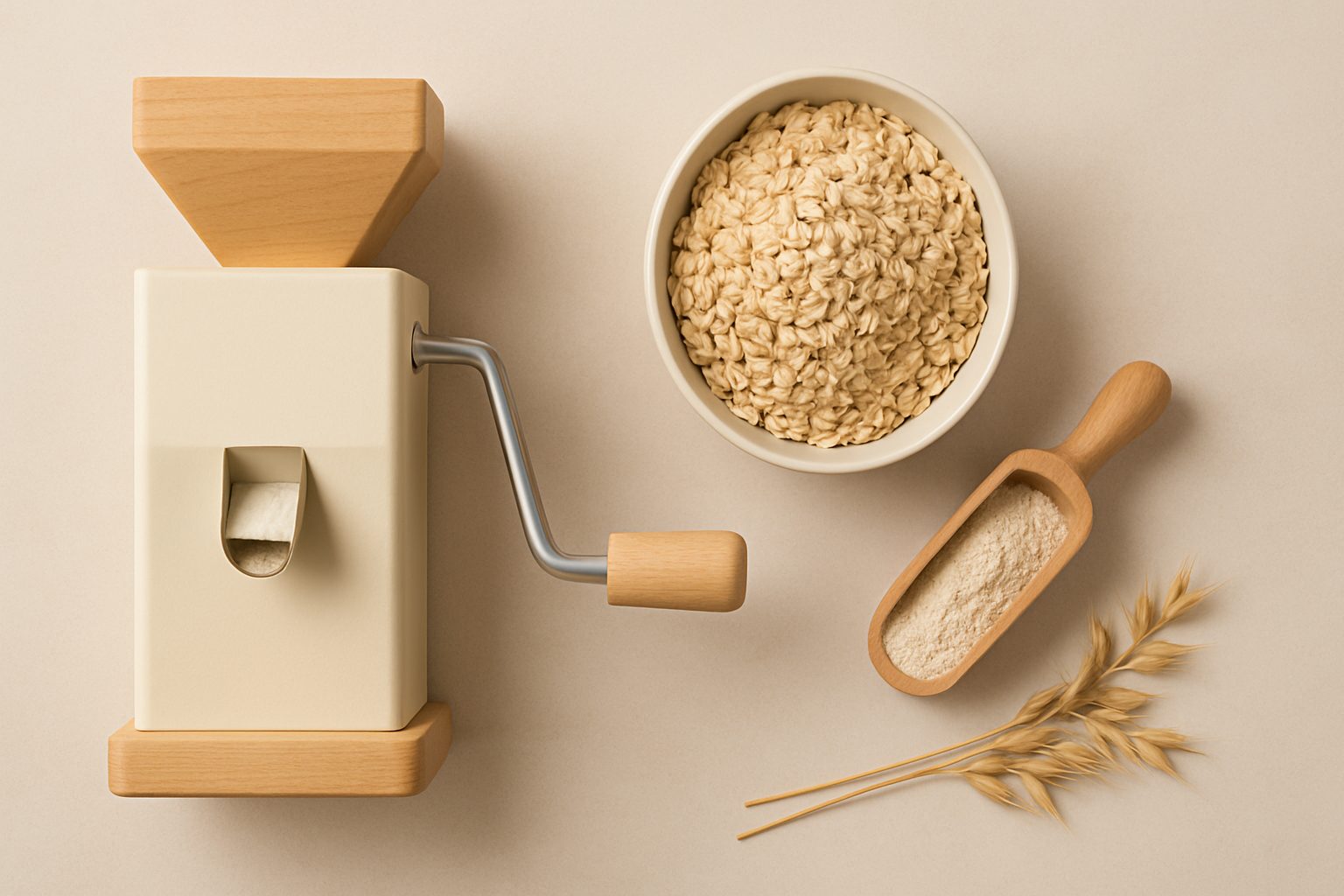
How Long Do Home-Rolled Oats Last? Storage Tips for UK Homes
When you've invested in a home grain roller, you'll want to make the most of every batch. Home-rolled oats offer superior freshness compared to commercial products, but that freshness comes with a catch: they don't last as long as heavily processed alternatives. Understanding how to store them properly means you can enjoy peak flavour and nutrition for weeks, rather than watching quality decline in days.
Why Home-Rolled Oats Deteriorate Faster
Commercial rolled oats are often heat-treated and sometimes include preservatives that extend shelf life to six months or longer. When you roll your own oats at home, you're removing the protective processing layer. You're left with something better nutritionally—no additives, genuine freshness—but more vulnerable to degradation.
The culprit is oxidation. Once the outer husk is cracked or rolled, the inner oat is exposed to oxygen. Fats in the grain begin oxidising immediately, causing rancidity. This is particularly noticeable with oats rolled from whole groats (the complete kernel) rather than oat flakes, which are sometimes de-hulled before rolling.
Temperature, humidity, and light exposure accelerate this process. The warmer your kitchen, the faster oxidation happens. This matters in the UK, where seasonal temperature swings from cool winters to occasionally warm summers can affect storage conditions in different rooms.
Expected Shelf Life
In ideal conditions, home-rolled oats will stay fresh for two to three weeks at room temperature. If you're using them regularly—a bowl a day or two—that's genuinely reasonable. For longer storage, your options shift the timeline significantly.
In the fridge, they'll keep for four to six weeks. In the freezer, you're looking at three to four months, though quality does deteriorate slowly even at freezing temperatures.
These timescales assume you started with sound oats (no moisture damage, no pre-existing rancidity) and you've stored them correctly from the moment you finished rolling.
The Critical Storage Factors
Air exposure is your primary enemy. Oxygen is what drives oxidation. An airtight container is non-negotiable. Ziplock bags work in a pinch, but they're not ideal for long-term storage—they allow slow oxygen diffusion through the plastic. Glass jars with proper seals, or hard plastic containers with airtight lids, are significantly better.
Many people find that airtight storage containers designed for dry goods—the snap-lock plastic containers sold for flour and cereal—work well. Amazon stocks dedicated options in various sizes: vacuum-seal containers (which actively remove air) are premium choices if you're rolling oats in larger batches. The investment is modest for the difference it makes.
Temperature matters more than most people realise. Room temperature (around 20°C) is acceptable for short-term use. Cool temperatures—a pantry that sits at 15°C or lower—extend freshness noticeably. The fridge or a cool cupboard away from the cooker is better still. Every 5°C drop roughly halves the oxidation rate, which explains why fridge storage nearly doubles shelf life.
Humidity creates two separate problems. Too much moisture can cause mould; too little causes the oats to dry out further (they're already low-moisture grain). UK homes are often humid, particularly kitchens. Avoid storing near kettles, dishwashers, or steamy windows. A bathroom cabinet, however, is usually too humid. Your best bet is a cool, dry cupboard or the fridge.
Light exposure contributes to oxidation, though it's less critical than air and temperature. Keeping oats in an opaque container or storing them away from bright sunlight is a sensible precaution, but a clear jar in a dark cupboard beats a clear jar by the kitchen window.
Spotting Spoilage
Home-rolled oats that've gone off display unmistakable signs. The clearest is rancid smell—a sharp, slightly unpleasant scent that's difficult to miss once you've encountered it. It smells nothing like fresh oats.
Visible mould is rare but possible if moisture got in. Discard them immediately.
Texture change—becoming noticeably harder, clumpy, or oddly soft—usually means moisture infiltration or advanced staleness.
Honestly, if you're eating them regularly, spoilage won't happen. The issue only becomes pressing if you roll a large batch expecting them to last weeks without proper storage.
Practical Tips for Consistency
Roll smaller, more frequent batches rather than one massive batch every month. Two medium batches means fresher oats overall and less risk from storage failure.
Label your container with the rolling date. You'll forget otherwise, especially if you have multiple batches going at once.
If you've got freezer space, freeze half the batch immediately after rolling. Thaw in the fridge the night before you want to use it. This is the most reliable method for keeping batches fresh across longer periods—particularly useful if you batch-cook porridge or oat bakes weekly.
Keep your roller and storage setup on the same shelf. A streamlined workflow—roll, immediately transfer to airtight container, straight into the cupboard or fridge—minimises the time oats spend exposed to air.
The Real Advantage
Yes, home-rolled oats require more attention to storage than the bag you'd buy at the supermarket. But the flavour difference is genuine. Fresh oats taste noticeably sweeter and richer. That freshness, combined with the satisfaction of controlling exactly what goes into your breakfast, makes the modest storage effort worthwhile.
Master these storage basics, and you'll find that home-rolled oats fit perfectly into a regular eating routine. Most people roll twice a month, keep their current batch in the fridge, and freeze the rest. Simple, effective, and the oats taste far better than anything you'll find on a shelf.
More options
- Electric Home Grain Flaker / Roller (Amazon UK)
- Manual Grain Roller for Home Use (Amazon UK)
- KitchenAid / Stand Mixer Grain Roller Attachment (Amazon UK)
- Eschenfelder Grain Flaker (Amazon UK)
- Whole Grain Oats & Wheat Berries (consumable upsell) (Amazon UK)