Grain Roller vs Grain Mill UK — Which Should You Actually Buy?
If you're shopping for equipment to process your own grains at home, you'll quickly hit the same question: should you buy a grain roller or a grain mill? They look similar, they both cost £300–£1,500, and both claim to handle your grain. But they do fundamentally different things, and choosing the wrong one wastes money.
The short answer: grain rollers flatten whole grains into flakes; grain mills pulverise them into flour. That distinction alone should guide your choice. Let me walk you through when you need each, the practical trade-offs, and how to decide.
What Does Each Machine Actually Do?
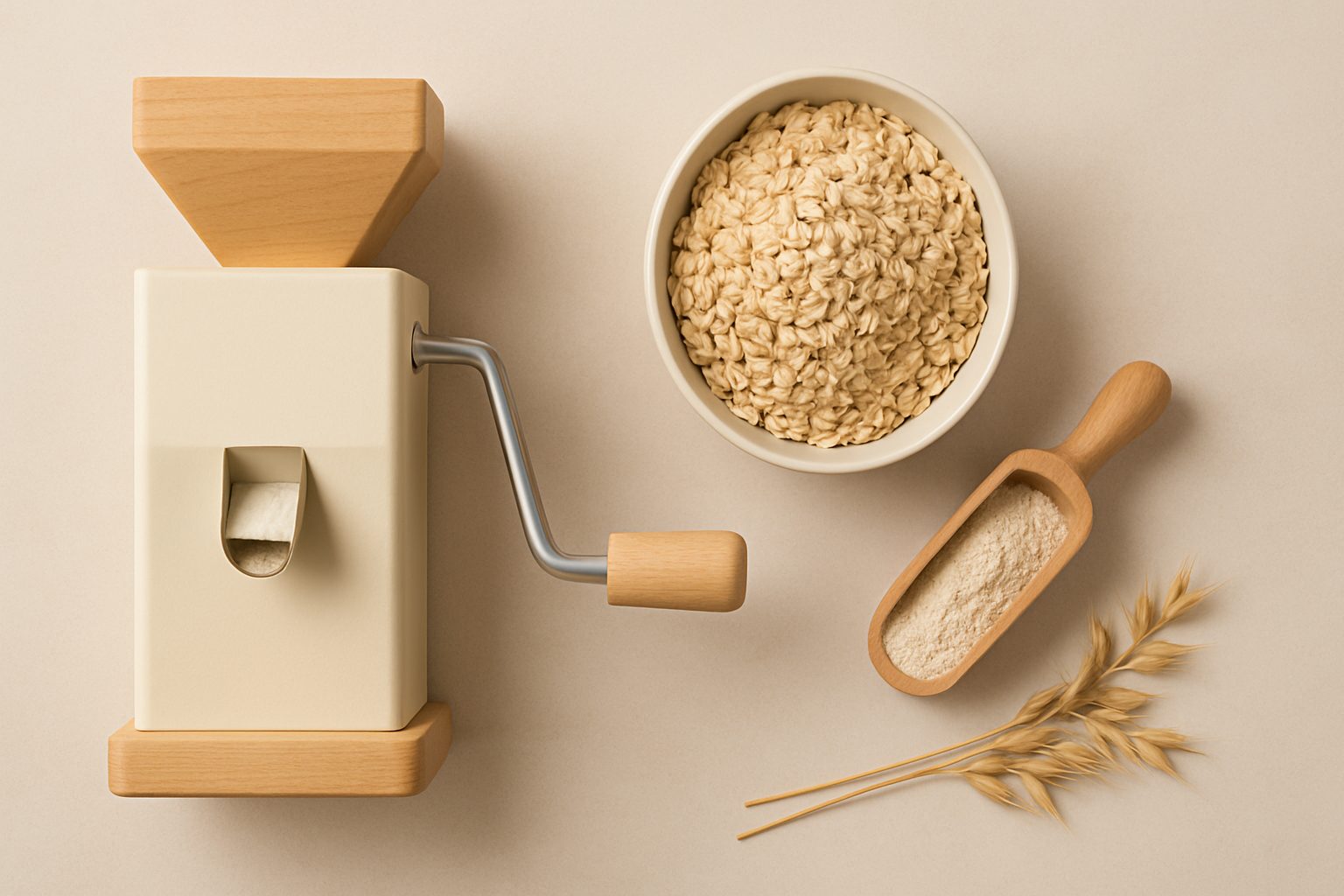
Grain rollers press whole grains between two rollers. You feed in barley, oats, or wheat berries, and out comes flattened grains — flakes, roughly the texture of porridge oats. The kernel stays largely intact; you're just changing its shape. A good roller will let you adjust the gap between rollers to make flakes thicker or thinner.
Grain mills use burrs, stones, or hammers to smash grains into powder. Feed in wheat berries, and you get flour. Feed in oats, and you get oat flour. The grain is completely broken down. Mills produce a range of textures depending on speed and grind setting — coarse meal to fine powder.
This difference matters because the two products behave differently in cooking. Rolled oats cook faster and have a softer mouthfeel. Flour can be baked, made into porridge, or turned into baked goods. Whole grains won't do either well.
Use Cases: When You'd Want Each
Choose a grain roller if you:
- Make your own porridge and want control over oat texture
- Brew beer or make animal feed (brewers and smallholding owners use rollers constantly)
- Want to crack grains for livestock
- Prefer flaked grains for texture in granola, muesli, or baking
- Don't need flour — you're happy to buy that
The beauty of rolling is speed and simplicity. A roller typically takes 15–30 seconds per batch and produces very little dust. Your kitchen won't smell like a mill.
Choose a grain mill if you:
- Grind your own flour for bread or baking regularly
- Want oat flour, chickpea flour, or specialty flours not readily available
- Need fine control over flour grind (for different bread types)
- Are willing to invest in cleaning out the dust
- Want maximum ingredient flexibility
Mills take longer — several minutes for a decent-sized batch — and generate more dust and heat. Flour residue gets into crevices. But you get vastly more product diversity.
The Core Practical Differences
Speed and volume: A roller will process a kilo of oats in under a minute. A mill of the same price might take five minutes and generate considerably more heat. If you're processing bulk grain regularly, a roller is faster.
Dust and noise: Rollers are quieter and produce minimal dust. Mills are considerably noisier — your neighbours will know you're grinding — and coat your kitchen in a fine layer of powder. You'll need a dust cover or extractor fan if you mill frequently.
Texture control: Rollers give you one main variable: roller gap. Tighter gap = thinner flakes; wider gap = thicker. Mills offer more granular control over final texture (coarse to fine), but that's less important if you only need one product.
Maintenance: Rollers are easier to clean; a soft brush and you're done. Mills require more thorough cleaning because flour gets everywhere. Metal burr mills need occasional dressing (realigning the burrs) if used heavily.
Versatility: This is where mills win. The same machine can grind wheat to flour, oats to oat flour, chickpeas to chickpea flour, or spices to powder. A roller does one job well: flattens.
Cost and Space
Both are pricey for home use, but rollers tend to be slightly cheaper (£300–£700 for decent home models) than burr mills (£500–£1,500). Stone mills cost more still. Budget an extra £100–£200 if you want a motor — hand-cranking gets tiring fast.
Space-wise, both occupy a shelf, but you might want a separate work surface for milling because of the dust.
How to Decide
Ask yourself:
- Do I want flakes or flour? (Flakes = roller; flour = mill)
- How often will I use it? (Frequent heavy use = consider a burr mill for durability; occasional use = roller is fine)
- Do I need multiple grain products? (Yes = mill; no = roller)
- Can I live with dust and noise? (No = roller; yes = mill)
- Am I grinding for myself or livestock/brewing? (Livestock/brewing = roller; cooking/baking = mill)
If you're still unsure, the honest answer is: start with a roller. It's cheaper, faster, easier to use, and does the job for the majority of home grain processing (porridge, brewing, animal feed). Add a mill later if you find yourself wanting flour regularly.
When you're ready to shop, have your use case clear. Search for "home grain roller" or "home grain mill" on Amazon with your specific need (beer brewing, breadmaking, oat porridge) and filter by reviews mentioning that use. Real users spot durability issues that manufacturers won't mention.
More options
- Electric Home Grain Flaker / Roller (Amazon UK)
- Manual Grain Roller for Home Use (Amazon UK)
- KitchenAid / Stand Mixer Grain Roller Attachment (Amazon UK)
- Eschenfelder Grain Flaker (Amazon UK)
- Whole Grain Oats & Wheat Berries (consumable upsell) (Amazon UK)