Are Grain Rollers Compatible with KitchenAid & Stand Mixers in the UK?
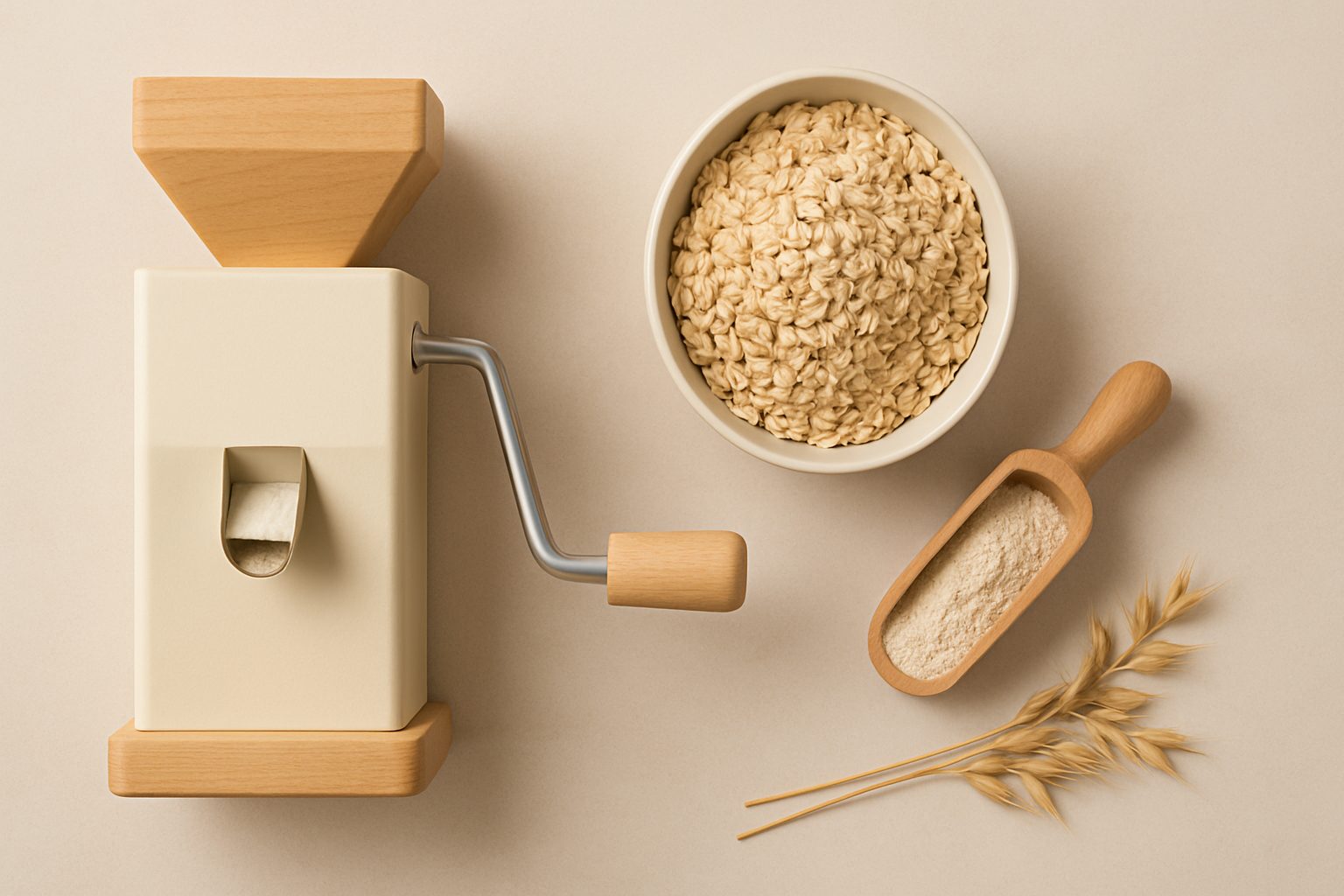
If you already own a stand mixer, the idea of attaching a grain roller seems logical. You've got the motor, the drive system—surely there's a compatible attachment gathering dust somewhere. The reality is more complicated. Grain roller attachments for stand mixers exist, but compatibility is patchy, and the standalone alternative often makes more sense for UK home millers.
KitchenAid Stand Mixer Compatibility
KitchenAid doesn't manufacture an official grain roller attachment for their iconic stand mixers. This is the first thing to understand. Their hub system supports dough hooks, flat beaters, spiral mixers, food grinders, pasta makers, and a handful of other gadgets—but not grain rollers.
Third-party manufacturers have designed grain roller attachments that fit the KitchenAid hub, but availability in the UK is limited. When you do find them, they're typically imported from the US, which means shipping costs and potential delivery delays. The attachments that do exist tend to be basic designs—two corrugated steel rollers that crack grain when you feed it through. They work, but not as smoothly or reliably as purpose-built grain mills.
The real issue is power. KitchenAid stand mixers run at speeds optimised for mixing and kneading, not for the consistent, controlled rotation a grain roller demands. Users report that running a grain roller attachment drains the motor and produces uneven roller pressure, leaving some grains cracked and others whole.
Kenwood and Other Stand Mixer Brands
Kenwood, widely available in the UK, offers better news. Some Kenwood stand mixer models do support grain mill attachments through their hub system. Kenwood's grain mills are typically more robust than third-party KitchenAid adapters, with better roller alignment and powered feed mechanisms. If you own a Kenwood and want to explore attachment options, check your model against Kenwood's compatibility chart—you might find an official attachment.
The Ankarsrum (Swedish stand mixer, increasingly popular in UK home baking circles) has a different drive system, and grain grinding attachments are available but again not always easy to source locally. You'd likely order from specialist retailers or international suppliers.
For most other stand mixer brands—Sunbeam, Smeg, vintage Hoosier models—dedicated grain roller attachments either don't exist or were discontinued years ago.
Why Attachment Compatibility Matters Less Than You'd Think
Even when an attachment exists, several practical factors favour a standalone grain mill:
Flour consistency. Stand mixer attachments produce grind profiles suited to all-purpose cracking, not the fine flour milling you need for bread-making. If you want consistent, bakery-grade flour, a dedicated mill gives you control over fineness that a mixer attachment simply doesn't offer.
Processing volume. A grain roller attachment processes grain slowly—usually a few hundred grams per pass. If you're milling more than a kilogram or two at a time, you'll spend hours recycling grain through the mixer. Standalone mills handle larger batches more efficiently.
Motor strain. Every report from users who've tried KitchenAid or similar adapters mentions the same thing: the mixer motor strains noticeably. Over months of regular use, this accelerates wear. A stand mixer isn't designed for grain-rolling duty.
Cost-benefit. A basic standalone grain mill costs £80–£200. A compatible KitchenAid attachment, if you can find one in the UK, runs £100–£150 plus potentially £30–£50 in shipping. For that outlay, you get a machine optimised for one job, with spare parts available and a manufacturer's warranty.
The Standalone Mill Advantage for UK Home Millers
For UK-based home grain rolling, a standalone electric mill makes more sense if you're serious about fresh flour. Entry-level models like the Mockmill 100 or Osttiroler stay compact, cost under £300, and produce consistent fine flour suitable for loaf-making. Hand-crank mills (Wondermill, Country Living) cost £60–£120, require no electricity, and give you precise control—ideal if you're milling small batches irregularly.
The real benefit: no compromise. You're not asking your bread-mixer to double as a grain mill. Your mixer stays focused on mixing. Your mill stays focused on milling. Maintenance and troubleshooting become straightforward because each tool does one thing well.
Checking Compatibility Before You Buy
If you're dead set on using an attachment with your existing stand mixer, your best bet is direct contact. Email the mixer manufacturer with your model number and ask explicitly whether a grain grinding attachment exists and where to source it in the UK. Online compatibility charts and retailer websites are often outdated or incomplete.
Be realistic about expectations too. Even when a compatible attachment exists, treat it as occasional-use gear. If you plan to mill grain weekly, a standalone mill will serve you better and protect your mixer's longevity.
The compatibility question often resolves into a simpler one: would you rather have a stand mixer for mixing and a grain mill for milling, or stretch one appliance to do both jobs awkwardly? For most UK home bakers and millers, the answer is clear.
More options
- Electric Home Grain Flaker / Roller (Amazon UK)
- Manual Grain Roller for Home Use (Amazon UK)
- KitchenAid / Stand Mixer Grain Roller Attachment (Amazon UK)
- Eschenfelder Grain Flaker (Amazon UK)
- Whole Grain Oats & Wheat Berries (consumable upsell) (Amazon UK)