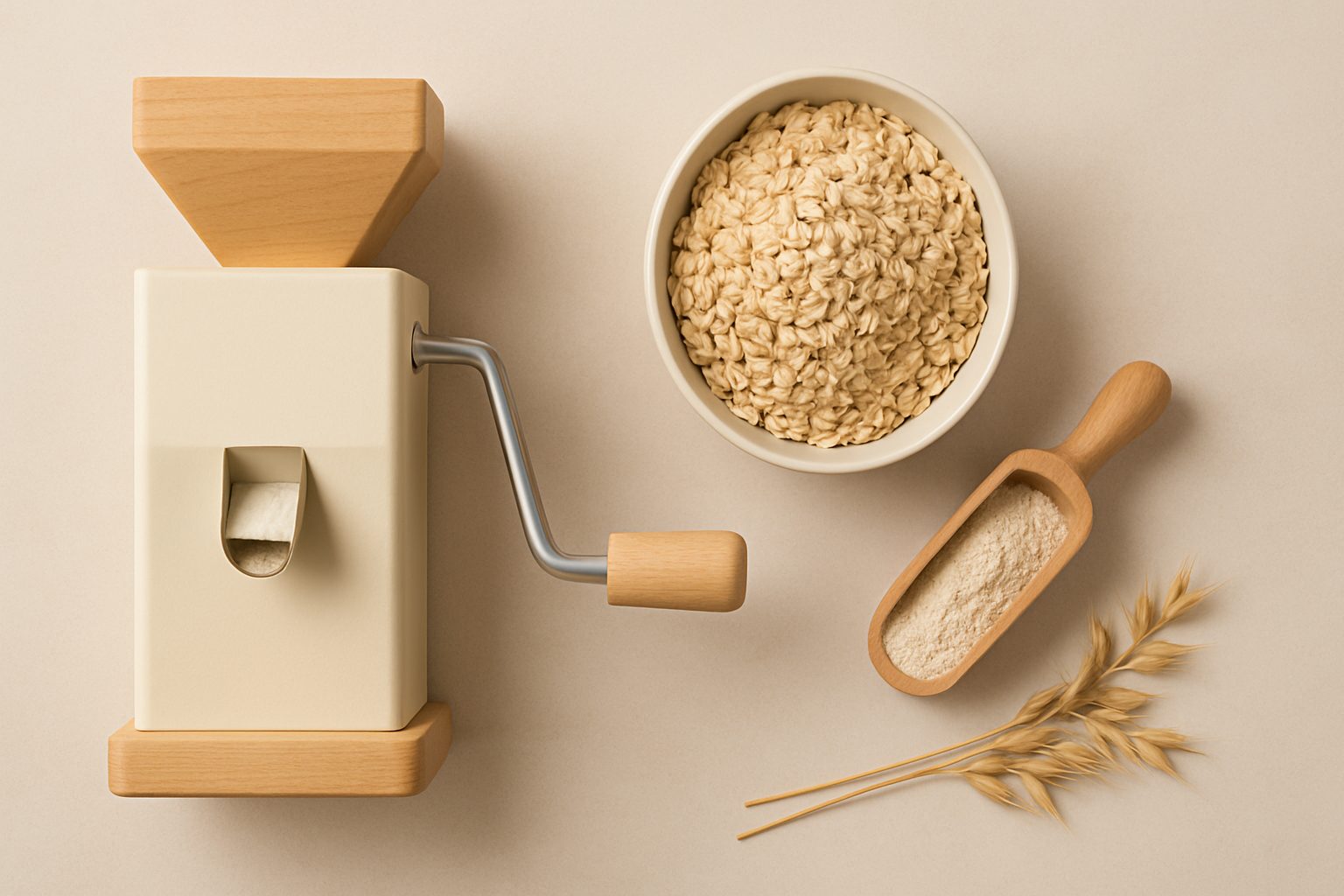
Grain Roller Attachments vs Standalone Machines UK: Buyer Comparison
If you're considering home grain rolling in the UK, you'll quickly face a fundamental choice: buy a grain roller attachment for an existing stand mixer like a KitchenAid, or invest in a dedicated standalone machine. Both approaches work, but they serve different brewing and baking habits. Understanding the real trade-offs—not marketing claims—will save you money and frustration.
The Cost Reality
Standalone grain rollers typically cost between £150 and £400 for consumer-grade models. Mid-range KitchenAid stand mixers start around £250–£350, and a dedicated grain roller attachment adds another £80–£150 on top. So yes, a full KitchenAid setup can match a decent standalone unit in total cost. But here's the critical detail: if you already own a compatible stand mixer, the attachment approach costs significantly less upfront.
That said, standalone machines often offer more durability at the budget end. A £150 dedicated roller from a specialist maker may outlast a mixer attachment that sees heavy use, simply because the attachment experiences more wear from the mixer's general workload.
Throughput and Capacity
This is where standalone machines often pull ahead, especially for serious homebrewers. Most standalone units can process 2–5 kg of grain per run without needing breaks, and they run continuously without motor strain. KitchenAid attachments, by comparison, are designed for intermittent use. You'll typically want to stop every 15–20 minutes to let the mixer cool, and the hopper capacity is more modest—often 1–2 kg at a time.
If you're brewing once a fortnight and milling 3–4 kg of grain, an attachment works fine. If you're doing multiple brews weekly or working with larger quantities, a standalone unit becomes much more practical.
What Versatility Actually Means
The attachment's "multi-purpose" appeal is real but worth examining honestly. Yes, your KitchenAid can knead dough, whip cream, and mill grain with different attachments. But the mixer only does one job at a time, so versatility is really about not needing separate equipment. That's genuinely useful if space is tight or your kitchen budget is limited. However, if you're primarily buying the mixer for grain rolling, that versatility argument doesn't justify the purchase. You're still paying stand-mixer money for a feature you may never use.
Standalone machines are single-purpose, which sounds limiting until you consider it the other way: they do one job exceptionally well and take up no more space than the attachment would occupy in a drawer.
Durability and Build Quality
Budget standalone rollers (under £200) often use painted steel and plastic components. They work fine for occasional use but can develop creep—where the roller gap gradually widens—after 2–3 years of regular milling. KitchenAid stand mixers, conversely, are engineered for durability. The machines themselves last decades, and the roller attachment, being a relatively simple mechanical component, tends to remain accurate for years. The trade-off is that mixer repairs and replacements are more expensive.
Mid-range standalone machines (£250–£350) typically use cast iron and stainless steel, with tighter engineering tolerances. These often perform as well as any home equipment you'll find and can easily last 10–15 years with basic maintenance.
Noise, Space and Usability
Stand-mixer attachments are quieter—the mixer's motor speed is optimised for general mixing, so grain rolling is relatively quiet. Standalone rollers range from tolerable to genuinely loud, depending on the model. If you're milling early morning or in a shared home, factor in 75–85 dB noise levels for many standalone units.
Space matters too. An attachment lives in a drawer. A standalone roller needs permanent or semi-permanent counter or garage space. For UK homes where kitchen real estate is premium, the attachment wins on practicality. For those with a brewery space or dedicated kitchen corner, standalone machines don't feel cumbersome.
KitchenAid attachments do require the mixer to be positioned at the right height and angle to feed grain smoothly. Some users find this awkward; others adapt quickly. Standalone machines are purpose-built for ergonomics, though ergonomics vary considerably between models.
Maintenance and Replacement Parts
Stand-mixer attachments rarely need servicing, but if something breaks, you're replacing the whole attachment (£80–£150) rather than a single component. Standalone machines often allow you to replace individual rollers or gears, which can extend the machine's life economically.
Cleaning is straightforward for both, though standalone rollers often have larger hoppers that catch fewer fine particles under the feed mechanism.
Which Should You Choose?
Choose an attachment if you already own a compatible KitchenAid or similar stand mixer, you mill less than 5 kg per session, and you value the existing multi-purpose functionality. The lower cost and quieter operation make sense for occasional bakers and brewers.
Choose a standalone machine if you're a regular brewer (weekly or more), you need higher throughput, or you want a machine engineered specifically for the job. The durability and precision of mid-range standalone rollers represent genuinely better value for frequent users, even if the upfront cost is slightly higher.
The worst decision is buying a stand mixer primarily for grain rolling when you don't already own one. At that point, a standalone unit simply makes more financial and practical sense.
More options
- Electric Home Grain Flaker / Roller (Amazon UK)
- Manual Grain Roller for Home Use (Amazon UK)
- KitchenAid / Stand Mixer Grain Roller Attachment (Amazon UK)
- Eschenfelder Grain Flaker (Amazon UK)
- Whole Grain Oats & Wheat Berries (consumable upsell) (Amazon UK)