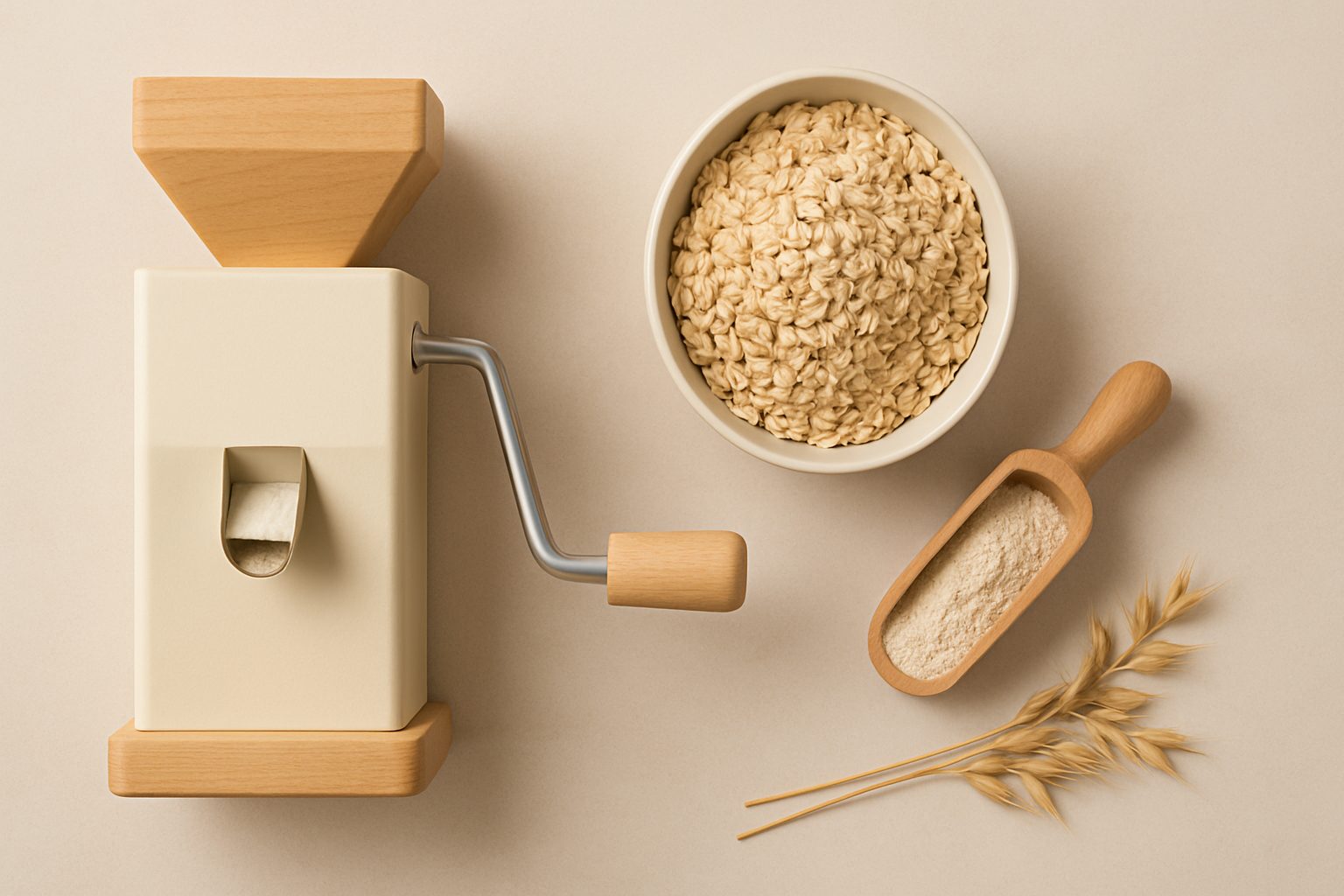
Best Compact Grain Rollers for Small UK Kitchens (2024 Picks)
If you're interested in fresh flour or rolled grains but live in a flat or cottage with limited worktop space, a full-sized grain roller isn't practical. The good news: compact models have genuinely improved. They won't replace a commercial mill if you're milling 20 kg weekly, but for household bread baking, porridge oats, and small-batch experimentation, space-saving rollers deliver real results without hogging your kitchen.
Why Compact Matters in UK Homes
British kitchens are famously compact. The average terraced kitchen is 2.5m × 3m—that's generous by London standards. Adding a 50cm-wide appliance that you use fortnightly is friction. Compact rollers (typically 25–35cm wide, under 5kg) sit on shelves, tuck into cupboards, or store vertically behind the microwave. That accessibility matters: you're more likely to actually use something you can access easily than something that requires clearing the worktop first.
Smaller mills also use less electricity—typically 150–300W versus 400–600W for commercial units—and run quieter (70–80dB rather than 85+dB), which matters in semi-detached homes.
Key Specifications to Check
Footprint: Measure your intended storage spot. Most compact rollers are 30–35cm wide and 15–20cm deep, but depth varies significantly. A model that fits horizontally on a shelf might not fit in an upright kitchen cupboard.
Weight: Under 3kg is genuinely portable; 4–5kg is tolerable; above that, you'll think twice about hauling it out. Check whether the base has rubber feet—cheap models slip on laminate worktops.
Roller material: Stainless steel rollers resist corrosion and are easier to clean than painted steel, though they cost £20–50 more. For occasional use in a damp British climate, the premium is worth it.
Gap adjustment: Micro-adjustment (down to 0.5mm) lets you produce everything from coarse cracked grain to fine flour. Fixed or coarse-only adjustment is limiting if you want variety.
Top Compact Models
Home Grain Roller (Compact Series) — around £180–220 This is probably your main contender. It's 32cm wide, 18cm deep, weighs 4.2kg, and has fine gap adjustment (0.5–3mm). Stainless rollers, decent motor (200W). The instruction manual is clear; online support is patchy but forums are active. Real users report consistent results for whole grains and wheat berries; oat rolling is efficient. Noise is moderate—fine for daytime use, not for 6 a.m. If you mill anything abrasive (sand in heritage grains), clean between runs. The motor can strain on very hard grains like barley straight from the field, so you may need to soak harder grains overnight first.
NutriMill Compact — around £140–170 Smaller footprint (28cm × 16cm), lighter (2.8kg), and cheaper. One-speed motor (no adjustment—fixed fine grain setting). Good for wheat and soft grains; less versatile if you want coarse cracking. Build quality is adequate but not premium. Some users report the motor burning out after 2–3 years of weekly use; for casual baking, it's fine.
Barley & Rye Manual Roller — around £95–130 No electricity required. Pure mechanical design, 25cm wide, about 2kg. You hand-crank it, which is genuinely slow (one handful of grain per minute), but it's silent, portable, and never breaks down electrically. Roller gap is fixed, set for medium crack. Best for small quantities and as a backup for power cuts (more common than you'd think in rural areas). Not a daily-driver for family baking.
Practical Pros and Cons
Compact rollers shine when:
- Your kitchen is under 10 square metres usable space
- You mill less than 2kg per week
- You value quiet operation (semi-detached or flat living)
- You want a grain roller but it's not your primary appliance
They disappoint when:
- You need ultra-fine flour for pastry (they struggle below 0.5mm; you'd want a grain mill instead)
- You bake professionally or weekly for a large household
- You want to process very large quantities (hard grains, seeds) without frequent maintenance
- Your worktop isn't stable; vibration is noticeable on cheap laminate
Storage and Accessibility Tips
Vertically stored models with carry handles (check weight and balance) can live on a kitchen shelf, bookcase, or inside a cupboard door if you mount a bracket. Some people keep theirs in a bread-making storage box alongside flours and grains—everything together, one trip to fetch.
Wipe rollers after every use with a dry brush. Don't use water unless the manual says sealed—moisture promotes rust on painted steel. If you're storing it unused for months, drape a cloth cover to keep dust off.
The Buying Reality
Amazon UK stocks the compact models above, plus several unbranded copies (£60–100) that are mechanically identical but come with no warranty and confusing manuals. The gamble is low-cost but risky if the motor fails six months in.
Buy from a UK specialist (search "compact grain roller UK") if customer support matters to you. Prices are similar to Amazon, and you'll get readable English documentation and actual returns handling.
For most small households, the Home Grain Roller Compact is the sensible middle ground: proper build, fair price, space-efficient, and quiet. The manual option is brilliant if you genuinely enjoy the ritual or have unreliable power. The budget electric models work fine for occasional use but treat them as disposable.
Size constraints needn't stop you using whole grains at home. A compact roller in a small kitchen makes daily milling feasible.
More options
- Electric Home Grain Flaker / Roller (Amazon UK)
- Manual Grain Roller for Home Use (Amazon UK)
- KitchenAid / Stand Mixer Grain Roller Attachment (Amazon UK)
- Eschenfelder Grain Flaker (Amazon UK)
- Whole Grain Oats & Wheat Berries (consumable upsell) (Amazon UK)