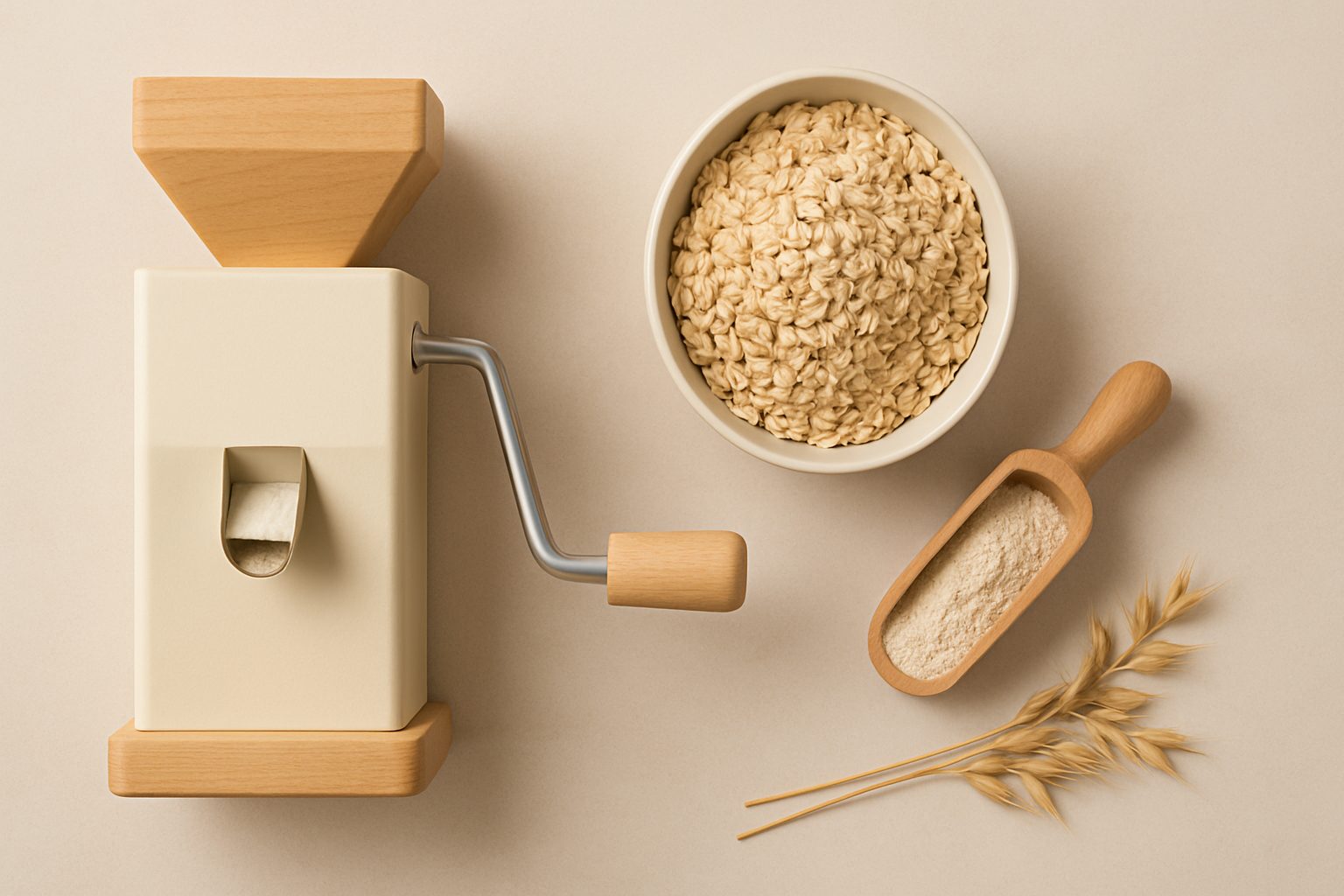
Best Heavy-Duty Home Grain Rollers for Large UK Families
If you're milling grain regularly for a household of five or more—whether for animal feed, bread-making, or home farming—a domestic grain roller quickly becomes a necessity rather than a luxury. A hand-crank or small electric model will leave you frustrated within weeks. This guide focuses on heavy-duty electric grain rollers built to handle daily use without grinding to a halt (literally) when you need them most.
Why Large Families Need Proper Milling Capacity
Grinding grain by hand works fine for occasional baking. But once you're processing sacks for livestock feed, making flour for a real bread routine, or milling grains for mixed poultry rations, hand power becomes exhausting. A household of five or more typically needs to process 20–50 kg of grain weekly, depending on what you're feeding and baking.
Small consumer models—the 50W compact units—were never designed for this. Their rollers clog, their motors overheat, and they jam on tougher grains. You'll spend more time clearing blockages than actually milling. Commercial-grade home models, by contrast, are engineered for sustained duty cycles. They cost more upfront, but they're reliable when you actually need them.
Motor Power and Roller Durability Matter
The first real difference between a toy grain roller and a workable one is motor power. Look for models with at least 1000W (1.4 hp) for practical home milling. This gives you the torque to handle whole grains, mixed feeds, and tougher varieties without stalling.
Roller material is equally critical. Hardened steel or cast-iron rollers last significantly longer than painted mild steel. When you're running a roller three or four times weekly, the wear is relentless. Cheap rollers develop flat spots and uneven surfaces within months, making your output inconsistent and coarser than intended. Heavy-duty models use industrial-grade rollers that hold up for years with basic maintenance.
Feed hoppers on serious models hold 10–20 kg, versus 2–3 kg on smaller units. This matters when you're processing 15 kg at a sitting. You're not constantly stopping to refill, and there's less chance of the hopper starving the rollers mid-batch.
Grit Settings: Why Adjustability Is Essential
For large families, you need the ability to adjust roller gap precisely. Bread flour demands fine settings (0.5–1mm); mixed poultry feed might be 3–4mm; whole grains for sprouting need no grinding at all. A model without clear, repeatable adjustment settings will frustrate you daily.
Look for models with either a numbered dial system or a micrometer screw. You want to be able to set it once, run ten batches, and know you're getting consistent results. Many mid-range models have vague friction adjusters that slip under load—avoid these.
Noise, Heat, and Continuous Runtime
Electric grain rollers generate noise. Full-stop. Expect 80–90 decibels from a serious model. This is unlikely to breach neighbours' tolerance during daytime weekday use, but it's not quiet. Plan your milling for reasonable hours if you're in a terrace or semi.
Heat buildup is real with sustained use. Many heavy-duty models have thermal cutouts that kill the motor if it overheats. This is a safety feature, not a bug, but it matters when you're processing 40 kg in one session. Run the machine for 15–20 minutes, then let it cool for 10. Don't expect to run continuously for an hour.
Quality models have better ventilation and slower, more efficient motor designs. They run cooler and last longer. Cheap motors with poor cooling seize or burn out within 2–3 years of heavy use.
Maintenance and Reliability
Unlike many kitchen appliances, grain rollers are simple enough to maintain yourself. Check that the model ships with a cleaning brush (debris builds up between the rollers), spare belts, and easy-access motor vents.
Sealed bearings are preferable to open ones—they resist grain dust better. You'll still need to clean the rollers after use, especially if you're processing flax, hemp seed, or other oily grains that cake on. This takes ten minutes with a soft brush and is non-negotiable if you want the roller to last.
Practical Considerations for UK Homes
Check the power cable is properly grounded (three-pin plug). Some imports arrive with dodgy electrics. If you're not confident about electrical safety, have a qualified electrician look it over.
Vibration dampening matters if your roller sits on a wooden bench or table. Some models come with rubber feet; others benefit from a heavy wooden base underneath. A vibrating table is annoying and can accelerate bearing wear.
Storage is also a factor. A heavy-duty electric roller weighs 12–20 kg. You need a solid bench and space for the hopper to clear doorways. Don't tuck it into an awkward corner where you'll dread getting it out—you'll use it less.
Final Word
A heavy-duty grain roller is a worthwhile investment if you're genuinely processing grain regularly. The difference between a £150 toy and a £400–600 commercial-home model is not aesthetic—it's reliability, consistency, and the simple fact that one works when you need it and the other becomes clutter.
For families of five or more with livestock, a baking routine, or a serious smallholding operation, this is one of the few "back-to-the-land" purchases that actually earns its place in your shed.
More options
- Electric Home Grain Flaker / Roller (Amazon UK)
- Manual Grain Roller for Home Use (Amazon UK)
- KitchenAid / Stand Mixer Grain Roller Attachment (Amazon UK)
- Eschenfelder Grain Flaker (Amazon UK)
- Whole Grain Oats & Wheat Berries (consumable upsell) (Amazon UK)