Best Grain Flakers for Oats and Cereals at Home UK (2024)
If you've been buying pre-flaked oats from the supermarket, you're eating starch and dust. Flaked grain loses flavour within days of being broken down, which is why supermarket packets taste like cardboard no matter the brand. A home grain flaker lets you flake oats, barley, rye, and other cereals minutes before cooking—delivering the nutty sweetness and natural oils that make real porridge worth eating.
This guide focuses on dedicated flakers rather than universal grain mills. Flakers are built for one job: pressing whole grains into thin flakes with minimal heat. They're faster, quieter, and cheaper than mills, and they produce the exact texture porridge needs.
Why Fresh Flakes Matter
Whole grain oats contain oils that oxidise and go rancid once exposed to air. Supermarket flakes are typically 6–12 months old by the time they reach your kitchen. Even vacuum-packed bags deteriorate. When you flake at home, you're eating grain that's been broken down in the last few minutes—the difference in taste is immediate and significant.
Fresh flakes also retain more B vitamins and fibre structure, since you're not buying pre-processed grain that's been sitting in warehouses and transport. The cost difference is modest: buying bulk whole oats in 25 kg sacks from farm suppliers costs around £0.30–£0.50 per kilogram, versus £4–£6 per kilogram for supermarket flakes.
What to Look For
Hopper capacity: Domestic flakers hold 0.5–2 kg of grain. Larger isn't always better—a cramped hopper means you're refilling constantly, but an oversized one takes up unnecessary space.
Motor power: Look for 200–500W. Anything less struggles with tougher grains like barley; anything more is overkill for occasional home use and wastes electricity.
Roller material: Steel rollers outlast other materials and handle moisture better. Some models use ceramic or composite—they're quieter but wear faster with heavier use.
Noise level: Most domestic flakers run at 70–80 dB. They're not silent, so don't expect to flake grain while someone's sleeping nearby.
Footprint: Most fit a standard kitchen shelf. Check depth before buying; many models are deeper than they look.
The Best Grain Flakers for Home Use
Hawos Novum II
This Austrian-made flaker is the benchmark for domestic use. It has a 1.5 kg hopper, 300W motor, and produces consistently thin flakes in 5–7 minutes per kilogram. The steel rollers are durable and adjustable if you want coarser or finer flakes. It's built to last—many owners report using the same machine for 15+ years.
The motor runs quiet relative to competitors, and cleanup is straightforward: a brush comes with it. The downside is price: it's the most expensive option at roughly £250–£300. But it's a one-time buy if you maintain it properly.
Komo Fiona 200
A German alternative that competes directly with the Hawos. The Fiona has a 1 kg hopper and 200W motor, making it slightly more compact and affordable (around £180–£220). Flaking speed is comparable—about 6–8 minutes per kilogram. The rollers are adjustable for texture preference.
It's lighter and quieter than the Hawos, which suits smaller kitchens. Reliability is solid, though some users report that after 5–10 years, the motor can struggle with barley or very dry rye. For oats alone, it's genuinely excellent value.
WonderMill Matrix
Less common in the UK but available through specialist suppliers, the Matrix is the budget option (£120–£160). It's a compact, lightweight flaker with a smaller hopper and 150W motor. Flaking is slower—expect 10–12 minutes per kilogram—but it's perfectly adequate for occasional home use.
The motor is quieter than heavier machines, and it takes up minimal space. The trade-off is durability: the rollers aren't as robust, and after 3–5 years of regular use, performance can dip. Buy this if you're testing the concept or flaking once or twice weekly.
Family Home Flaker (KitchenCraft)
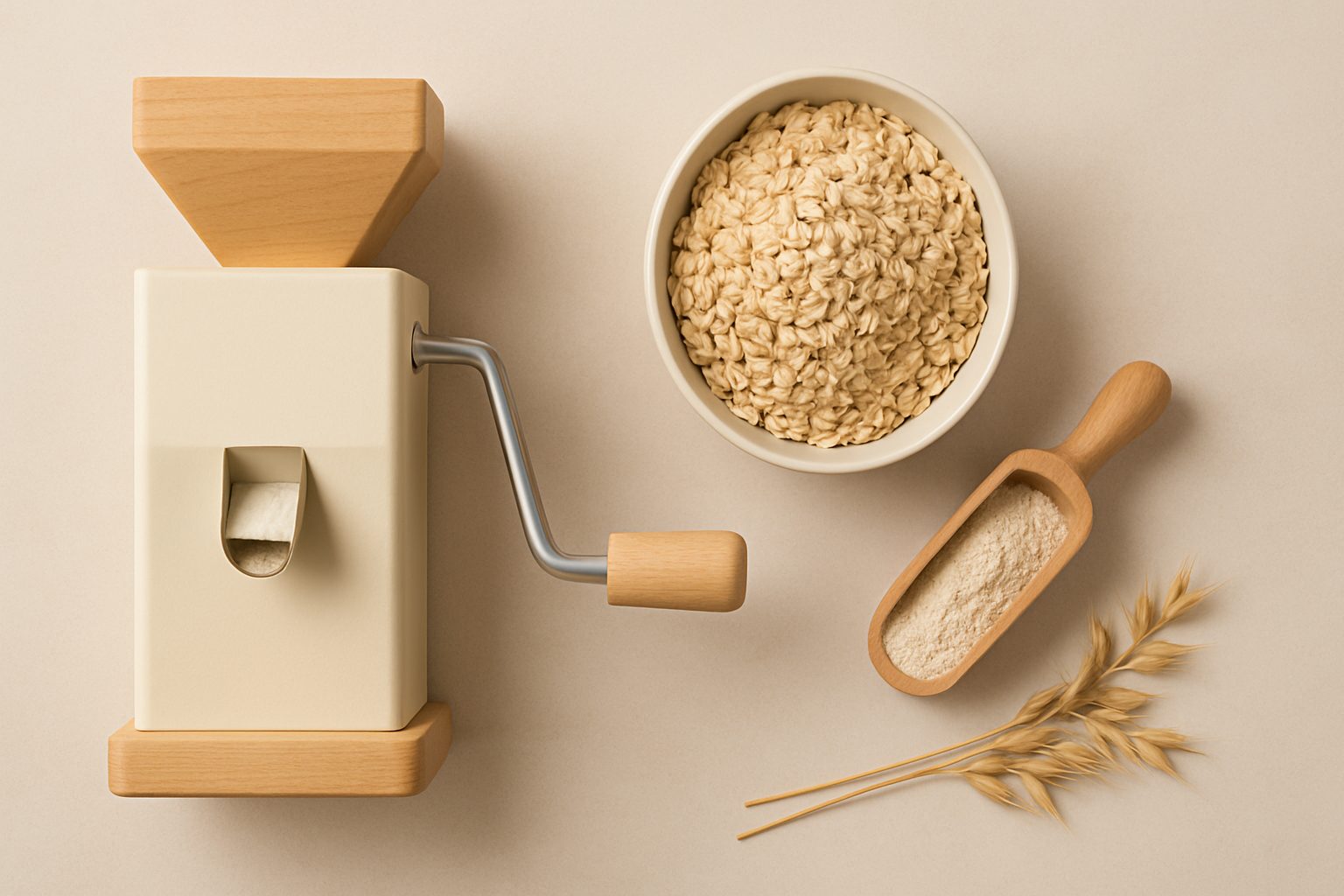
A British option that's hard to find now but occasionally appears online. It's manual—you turn a crank to feed grain through steel rollers. No electricity needed, no noise, and it costs £80–£120 secondhand. Flaking speed is slow (15–20 minutes per kilogram) and physically tiring, but it's reliable and teaches you exactly what's happening in the machine.
Manual flakers suit people who flake grain infrequently or value the hands-on process. They're also good for outdoor use or camping. The downside: they're labour-intensive and you can't batch-process.
Salzburg Grain Flaker (newer models)
Recently reissued in the UK market after years out of stock. It's a middle-ground option: 250W motor, 0.75 kg hopper, adjustable rollers, roughly £200–£250. It flakes about 5–6 minutes per kilogram and has good reviews for durability.
Less information is available about long-term reliability since the relaunch is recent, but the original design has a solid reputation.
Making Your Choice
If you flake grain daily or nearly every morning, the Hawos or Komo are worth the investment. If you're occasional (two or three times weekly), the WonderMill or a secondhand manual flaker is sensible. For experimenting, buy used—flakers hold their value and a secondhand Hawos is often cheaper than a new budget model.
Avoid ultra-cheap models under £80 (new): they typically have weak motors and plastic rollers, and they fail within months of regular use.
Buy bulk oats from farm suppliers or online wholesalers—Shipton Mill, Doves Farm, or local agricultural merchants usually stock 25 kg sacks at competitive prices. Store in airtight containers in a cool cupboard, and they'll keep for a year without issue.
Fresh flakes transform your breakfast. The investment pays itself back in taste alone.
More options
- Electric Home Grain Flaker / Roller (Amazon UK)
- Manual Grain Roller for Home Use (Amazon UK)
- KitchenAid / Stand Mixer Grain Roller Attachment (Amazon UK)
- Eschenfelder Grain Flaker (Amazon UK)
- Whole Grain Oats & Wheat Berries (consumable upsell) (Amazon UK)